


Iran Retaliates as Explosions Rock Northern Israel
In a major escalation of conflict in the Middle East, the United States and Israel launched a massive joint military offensive against Iran on Saturday, February 28, 2026.
The operation, which involved both air and sea strikes, hit numerous targets across the country, including an apparent strike near the offices of Supreme Leader Ayatollah Ali Khamenei in downtown Tehran.
n response, Iran’s Revolutionary Guard announced it has initiated a “first wave” of retaliatory drone and missile attacks targeting Israel, while Bahrain confirmed that a missile strike also targeted the U.S. Navy’s 5th Fleet headquarters in the island nation.
Confirming the start of “major combat operations,” President Donald Trump stated in a video message that the offensive aims to dismantle Iran’s nuclear and missile programs, which he claimed have continued to develop despite diplomatic efforts.
Trump appealed directly to the Iranian public to “take over your government,” framing military action as a catalyst for popular regime change. Israeli Prime Minister Benjamin Netanyahu echoed this objective, asserting that the joint campaign was necessary to “remove an existential threat” and empower the Iranian people to reclaim their sovereignty
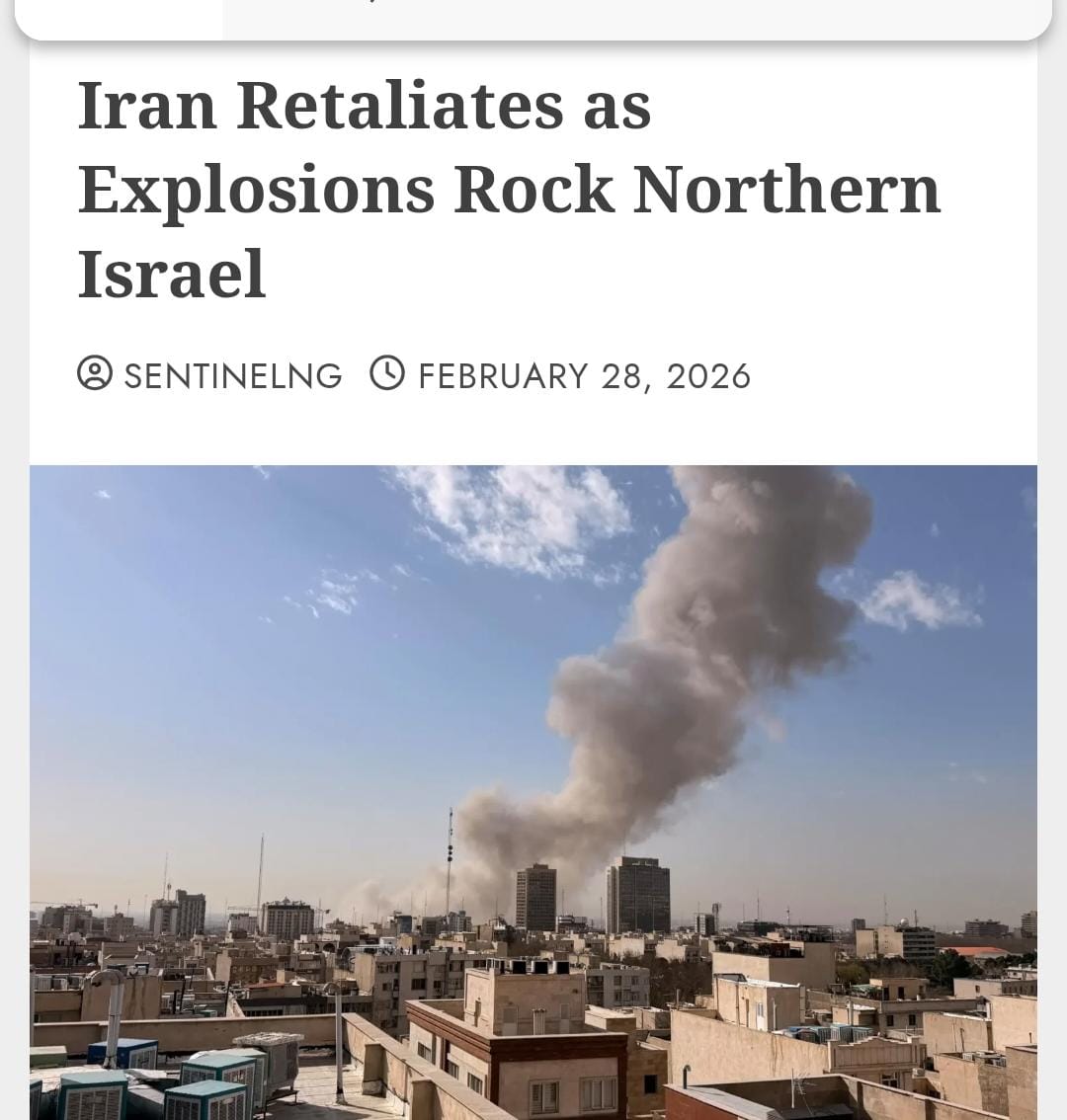
The human and logistical impact of the conflict was immediate, as explosions were reported in several Iranian cities and thick smoke rose over Tehran.
The regional fallout continues to widen as Iran-backed Houthi rebels in Yemen vowed to resume attacks on Red Sea shipping routes and Israel in support of Tehran.
Meanwhile, neighbouring countries, including Iraq and the United Arab Emirates, have closed their airspaces to civilian traffic.